
New European candle safety standard EN 15493:2026 – what it means and what we do
This autumn an updated European fire-safety standard for candles was published: EN 15493:2026, “Candles – Specification for fire safety”. It replaces the 2019 edition and covers candles that are burned indoors. European countries must adopt it into their national standards by 31 March 2027, and with the old edition being withdrawn it is already coming into force.
For us safety is not a formality. Our candles end up in homes, on tables and shelves, often where there are children and pets. So here is what the standard asks for and what it means for our candles.

What the standard checks
EN 15493 sets out how a candle must behave while it burns. The main requirements:
- Stability – the candle must not tip over, even on a slightly sloping surface.
- No “second” flames – only the wick may burn. Melted wax or the candle itself must not catch fire.
- A moderate flame – the flame must stay below a set height.
- Safe extinguishing – once blown out, the candle must not relight by itself, and the smoke must stop quickly.
What is new in the 2026 edition
The new edition adds requirements for candles with several wicks, so that the flames do not merge into one large flame, and a new flammability test for candles in containers. It is also stricter about how test results must be reported.

What we do
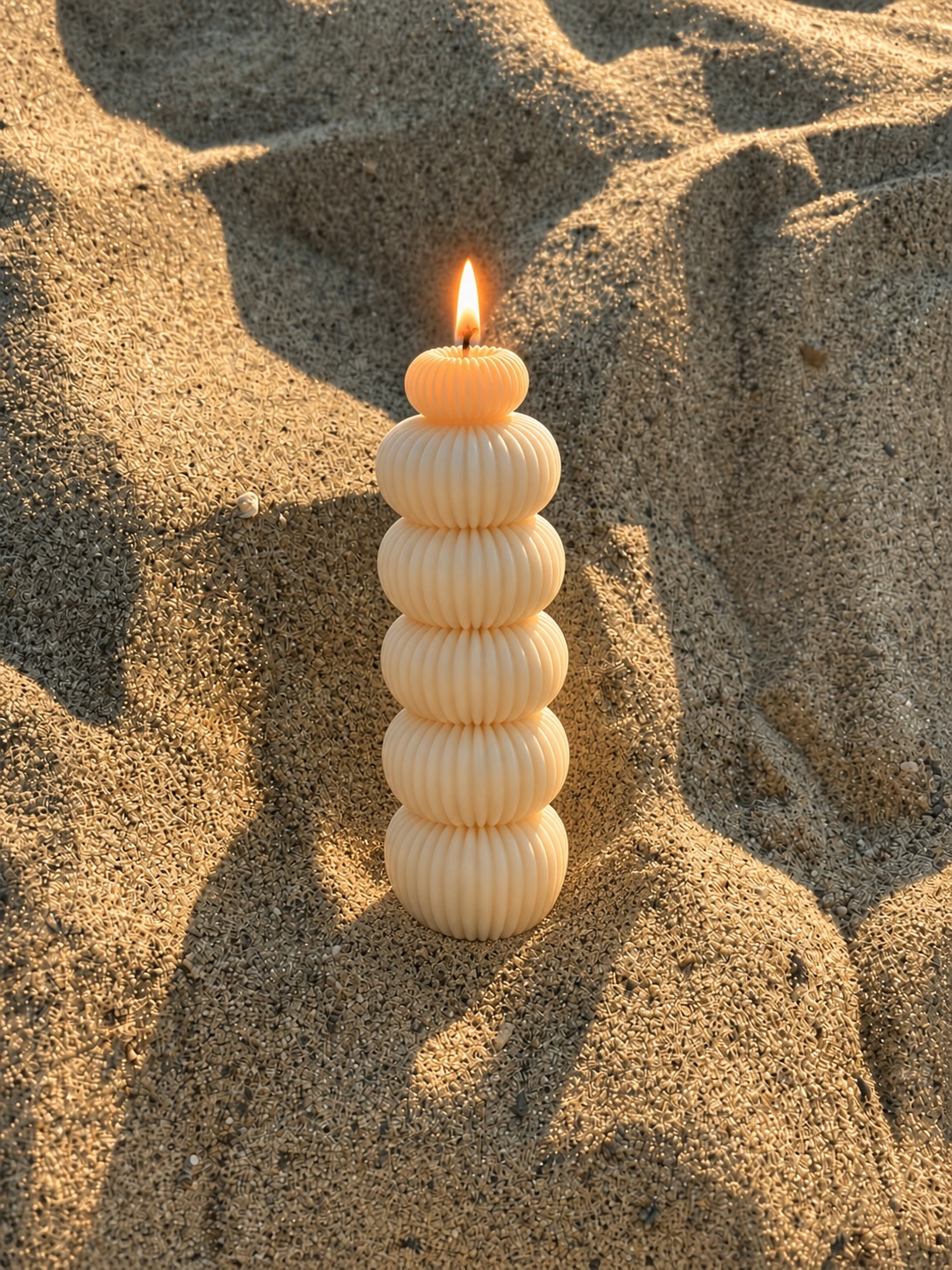
Our candles are free-standing, have a single wick and are made from 100% soy wax – no paraffin, no synthetic additives and no fragrance. Soy wax melts slowly and evenly, which is exactly what helps a candle burn calmly.
- Every candle comes with safety instructions: never leave a burning candle unattended, keep it away from children, pets and anything flammable, and always place it on a fire-resistant base.
- We try out new shapes ourselves before they reach the shop – how the candle burns, how high the flame is and whether it stands steadily.
- In line with the new standard, we are checking our shapes – especially the tall and narrow ones – against the requirements of EN 15493:2026.
Our advice for burning a sculptural candle
Place the candle on a heat-resistant plate, keep it out of draughts, trim the wick to about 5 mm before lighting and never leave a burning candle unattended. A sculptural candle changes shape as it burns and wax may run – that is how it is meant to be.
If you have any questions about the safety of our candles, write to us at info@vilmacandles.com or visit our shop at Krišjāņa Barona iela 28 in Riga.
Sources: TÜV SÜD – EN 15493:2026 published; DIN EN 15493:2026-11.